


Everything you need to know about Tapas! The heart of Spanish culture and a flavorful journey through the essence of Spain.
What are Tapas? Beyond food, tapas are a social tradition, a way of life, and a core part of Spanish culture. Spain has the highest number of bars per capita—even more than Ireland and the UK! These lively spots are where authentic tapas shine, bringing friends together over a drink—wine, beer, or vermouth—paired with small, flavorful bites.
Misconception
Many think tapas are loads of small plates piled in the center of the table to pick into. However, a true “tapa” is originally a single-serving bite served with a drink, traditionally enjoyed while standing at the bar. The ratio would be one tapa per round, so yes, you share the dish, but it’s not a massive feast of little plates all served at once. If you are more than two people, you’ll want to order a “ración,” a slightly larger portion designed for group dining.

Traditional Vs. Modern Tapas
Back at its origin, you wouldn’t order “tapas” per se; you would order a drink, and a free small bite would come by magic with it. Nowadays, the formula has changed quite a bit. You still can find the old traditional tapas here and there, especially in Granada, although now you’ve got to pay for them and choose which ones you’d like. Today, everything is permitted, and sitting at the table and ordering many “tapas” or “raciones” to share is pretty standard.
A Culture’s Ritual
In Spain, they love their tapas so much that you’ll often hear these few expressions: ir de tapas (going for tapas), A tapear! (Let’s eat Tapas!), algo para picar (something to nibble on), etc. This delicious social ritual is a great way, if not the best, to experience Spain and its people!

The Origin of Tapas
Tapas originated in Andalusia, the sun-drenched southern region of Spain, but their exact beginnings remain a mystery. Many stories attempt to explain how this iconic culinary tradition began. Here are a few of the most popular theories:
Another tale credits King Alfonso X of Castilla, whose doctor allegedly prescribed him wine with small bites between meals. Once recovered, the king supposedly decreed that all taverns must serve food with drinks.
 The origin of tapas is shrouded in myth and legend, with several theories competing for the title of truth. The most famous story suggests that bartenders placed slices of ham, cheese, or olives over glasses of sweet fortified wine to keep pesky flies away—hence the word “tapa,” which means “lid” in Spanish.
Some believe tapas were a clever bar trick, offering salty snacks to make customers thirstier—an idea that still holds today. Meanwhile, King Felipe III is said to have enforced a law requiring bars to serve food with alcohol to prevent sailors and soldiers from getting too drunk and disturbing the peace.
While the actual origin remains uncertain, the most plausible explanation seems to be the simplest: a practical way to cover a drink. Whatever the truth, tapas have evolved into a beloved Spanish tradition, offering a delicious way to enjoy food, drinks, and good company.
The Many Names of Tapas
Spain’s tapas culture is diverse, with each region offering its own twist on these small bites. While they all serve the same purpose—enhancing social gatherings over drinks—their formats, customs, and names vary. Here are the main types of tapas you’ll find across Spain:
Pintxos / Pinchos

Pinchos (Pintxos) – Popular in the Basque Country, these small bites are skewered onto a piece of bread with a toothpick. You’ll find an array of toppings, from fresh seafood to cured meats and cheeses. These bars are easily recognizable, as their counters are lined with tempting “tapas” displays rather than traditional menus. The variety is endless—croquetas, chorizo, goat cheese, tomato, tuna, salmon, tortilla de patata with aioli, gulas (baby eels), and more, all waiting to be enjoyed!

The system at Pintxos Bars is straightforward: grab an empty plate—usually found at the counter near the entrance—and help yourself to the delicious selection of pintxos on display. If lucky, you might catch a fresh batch from the kitchen and snag a warm one before it even hits the bar. Each pintxo is typically priced the same, though some bars use different toothpicks to indicate varying prices—your waiter will explain. When you’re done, the waiter counts the toothpicks on your plate to tally up your bill, so be sure not to drop them!
For the whole experience, pair your pintxos with a glass of Basque Txakoli, a light and slightly sparkling white wine, or their famous hard cider, “sidra.”
Montaditos


Montaditos are essentially mini sandwiches, slightly larger than pintxos and without the toothpick. The name comes from the Spanish word montar, meaning “to stack,” as layering ingredients creates these bites. They offer endless topping possibilities, from quality canned seafood, cured meats, and cheeses to roasted vegetables or spreads.

*The famous Quimet & Quimet in Barcelona is a top contender for experiencing Mondatidos. They are made in front of you from the best quality conserved food. Don’t be scared to squeeze into this place!

Cazuelas / Cazuelitas
Cazuelas are warm tapas cooked and served in the same small clay pot. These are bite-sized portions of a bigger, more elaborate meal. Some tapas menus have a “warm” section, and dishes are usually served in a liquid.

You’ll find rustic favourites like Gambas al Ajillo (shrimp in garlic), Chorizo al Vino or en Sidra (chorizo in red wine or cider), Bacalao al Pil Pil (salted cod in olive oil sauce), Chipirones en su Tinta (mini squids in ink), and Albondigas con Sepia (meatballs with cuttlefish). Cazuelas are bigger than tapas and are more like a “ración”, so they are best shared with others. And don’t be shy about dipping a piece of bread to soak up all that broth – it’s the Spanish way!
Banderillas

Banderillas are mini cold skewers made with a colorful assortment of pickled ingredients such as pickles, small onions, guindilla chilis, olives, anchovies, peppers, shrimp, and cheese. These simple and vibrant bites are perfect for nibbling before dinner and are easy to enjoy while standing. You’ll find them not only in tapas bars across Spain but also in markets.
The most famous banderilla is the “Gilda,” a Basque version featuring a mildly spicy pickled guindilla chili, manzanilla olives, and top-quality anchovies. The Gilda is the undisputed favorite in Spain and can be found in most tapas bars.
*In Mercado de Villa de Vallecas, in Madrid, a stand serves up to 50 different types of Banderilla. Otherwise, check around any market, and you’ll find some.
Embutidos, Jamon and Cheese

Those are slightly different and are not considered “Tapas” in Spain, although they are used for the same purpose as tapas. Plus, the origin of tapas is probably from the Ham slice over the wine glass, so I think I do consider them “Tapas.”
Embutidos are all the different types of transformed meat, dry sausages and cured meats. Because in Spain, they have tons of them, and frankly, they are masters in the art of Embutidos! Often, you’ll find them on the Tapas menu but also in the bodegon or wine cellar shops; check if there are tables in the back, and the chances are that they serve Embutidos with wine.

The ham isn’t considered an “Embutido“; it’s got a category of its own because, sincerely, it’s just the ultimate tapa to try in Spain. You’ve got all kinds of hams from the Iberico de Bellota, Serrano, Teruel, etc. It can be quite a journey to try them all, but if you’ve got to do just one, go for a Jamon Iberico de Bellota. It’s those acorn-fed Black Iberic pigs which are simply divine! It is a high gastronomy bite to try on any foodie’s “Bucket list”!

Spain has a ton of delicious cheeses to explore! Manchego cheese is the most popular one you’ll get as a “tapa,” although many good tapas bars offer different cheeses. Some highlights would be the fresh goat cheese balls marinated in olive oil, the Payoyo, a strong tangy blue cheese called Cabrales, the smoked Basque cheese called Idiazabal and many more.
Spaniards love to blend different types of milk to create their cheeses, often mixing goat and sheep milk for a truly unique and delicious flavor. Due to Spain’s harsh sunny weather, cow’s milk is less commonly used for cheese, as goats and sheep are better suited to the dry, hot climate. This combination of goat and sheep milk results in a creamy, tangy, and rich cheese that’s a real treat for cheese lovers!
Other Tapas

Last, there’s a wide variety of standard tapas, ranging from classic Pescado Frito (fried fish), Chipirones (mini squids), croquetas of all kinds, and Patatas Bravas to ultra-modern “molecular” versions.
And there you have it—a whirlwind tour through the wonderful world of tapas! From pintxos that will have you picking up more than just a plate to saucy cazuelas begging for a piece of bread to dip, tapas genuinely embody the spirit of Spain. Whether you’re into cold bites like the iconic Gilda or prefer a warm, hearty dish that sings with flavor (hello, Chorizo al Vino), there’s a tapa for everyone, and yes, it’s totally acceptable to have just one more. After all, why eat one big meal when you can enjoy a whole spread of little ones? ¡Salud!
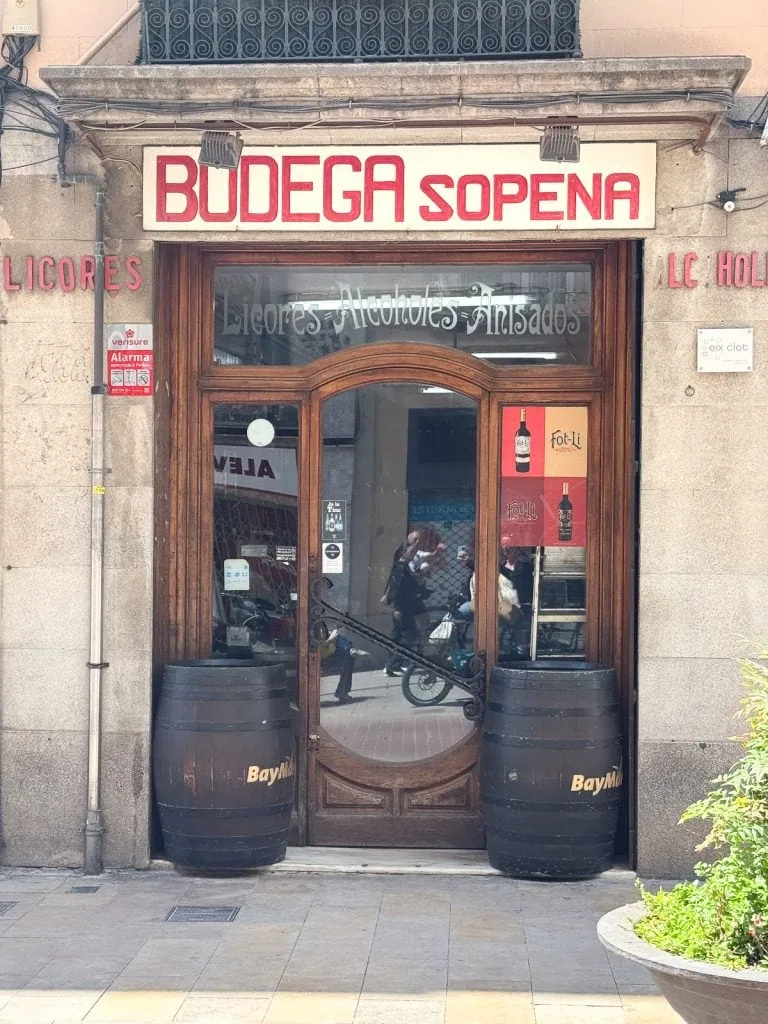
*If you are about to visit beautiful Barcelona, here is a link to my favourite Tapas places!
Vamos a Tapear!



18 Comments
Now I want to go to Spain! Thank you for compiling this thorough explanation of tapas. It’s good to know where they’ve come from.
I thought it was about time I write something about my adoptive land;)
This is a very timely post for us, Marie, as we are planning a trip to Spain next year. Thank you for this great information about tapas. I am very excited about going to experience it for myself. The combination of ‘vermut’ and salt tapas is intriguing. :0
It’s quite popular those days! The contrast of sweet and salty is just irresistible!
Wow! What a comprehensive post! We had a ton of fun eating tapas and pintxos throughout Spain, but especially in San Sebastian. In our experience, tapa bars provided fabulous offerings, great conversation with strangers, and friendly servers. We’re planning out next trip, so will look for the vermuterias!
I love San Sebastian! For tapas is a top destination for sure!
Thanks SO much for this informative post!I started a Pinterest board of tapas,but then came across some excellent Spanish food blogs😋!Am pinning this to that board,for my own reference,as well as anyone interested in expanding their culinary knowledge;(I am 56 today,so have been cooking a long time.so exciting to learn about other ethnicities!)Thanks💗P.S.I had to add to the name of my board as I was finding so many shareable recipes!Am a SPAZZ!
I’m glad to be of help! Hope you’ll come visit someday!
Such an interesting post! I’ve spent a fair bit of time in Basque country / northern Spain so I am familiar with Pintxos 🙂 This is a useful primer for anyone wanting to learn more!
Love San Sebastian! Such a yummy destination!
The word “Tapa” in Spanish means “lid” also Tapa comes from Spain. Wow very informative and well written post. Great images too. pinned them. http://scienceandsamosa.com
I love, love, love tapas and would love to go to Barcelona. There was actually a really interesting article in the Boston Globe last week about how Americans should adopt the Spanish schedule & diet to be able to reduce our reliance on air conditioning given climate change. Interesting!
Oh really!? Interesting, I ll check it out! Thanks for stopping by!
Fantastic post! I wish you’d written this about 2 years ago before I went to Barcelona for a week! Took me a while to cherry-pick a similar what’s-what-and-where-to-get-it list for our agenda~! Nice to see, some of the Tapas places we’ve been at are still around, though~ Quimet&Quimet and Tickets were two of the delicious milestones on our quest to ~eat~ Barcelona 🙂
Both unforgettable places for sure!
there’s nothing I love more these enjoying a glass of wine and some tapas!
Totally agree! It s the best ritual ever!
Pingback: 10 Tapas Places to try in Barcelona – The FoodOlic recipes